Tag Archives: Rv

RV Set Up Procedure: How to Properly & Easily Set Up A Travel Trailer at a Campsite

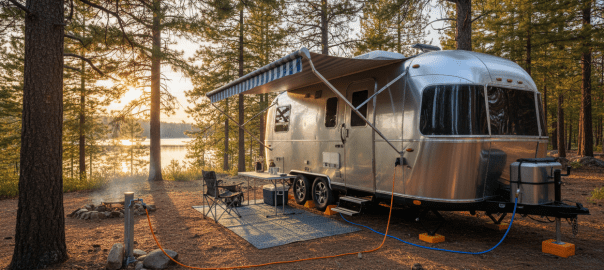
Arriving at a campsite after a long drive is one of the best feelings in the world — but only if your setup goes smoothly. Whether you’re a first-timer or just looking to sharpen your routine, this step-by-step guide will walk you through how to properly set up a travel trailer at a campsite quickly and confidently.

Step 1: Choose and Pull Into Your Site

Before unhitching, take a moment to survey your campsite. Look for a level spot, note where the hookups are (water, electric, sewer), and plan your pull-in angle. Back in slowly — use a spotter if you have one — and position your trailer so the door faces away from the sun or toward your preferred view.

Pro tip: Use your tow vehicle’s backup camera and take it slow. A few extra minutes here saves a lot of frustration later.

Step 2: Chock Your Wheels

Before you do anything else, place wheel chocks on both sides of your tires to prevent any rolling. This is a critical safety step — don’t skip it.

Step 3: Level Your Trailer

A level trailer is essential for comfort, appliance performance (especially the refrigerator), and slide-out operation. Use a bubble level or a leveling app on your phone.

  • Side-to-side: Use leveling blocks or ramps under the low-side tires.
  • Front-to-back: Adjust your tongue jack up or down until level.

Most modern travel trailers have a built-in level indicator — check your owner’s manual for its location.

Step 4: Unhitch from Your Tow Vehicle

Once level and chocked, you can safely unhitch:

  1. Lower the tongue jack until it takes the weight off the hitch ball.
  2. Disconnect the safety chains, brake controller plug, and trailer wiring harness.
  3. Release the hitch coupler and lift it off the ball.
  4. Raise the tongue jack fully and pull your tow vehicle forward.

Step 5: Deploy the Stabilizer Jacks

Stabilizer jacks (at the four corners of your trailer) reduce movement and sway when you’re inside. Lower them until they make firm contact with the ground — but don’t use them to level the trailer. That’s what leveling blocks are for.

Step 6: Connect to Shore Power

Plug your 30-amp or 50-amp power cord into the campsite’s electrical pedestal. Make sure the breaker is off before plugging in, then flip it on. Check inside that your outlets and appliances are working.

Note: Always use a surge protector to protect your RV’s electrical system from power fluctuations.

Step 7: Hook Up Water

  1. Attach a drinking-water-safe hose to the campsite’s water spigot.
  2. Connect the other end to your trailer’s city water inlet.
  3. Turn on the spigot slowly and check for leaks at both connections.

Pro tip: Use an inline water pressure regulator (set to 40–60 PSI) to protect your trailer’s plumbing from high campground water pressure.

Step 8: Set Up Sewer (If Full Hookup)

If your site has a sewer connection:

  1. Connect your sewer hose to the trailer’s drain outlet.
  2. Place the other end securely in the campsite’s sewer inlet.
  3. Keep your black tank valve closed until it’s at least two-thirds full — this prevents pyramid plugs.
  4. You can leave the gray tank valve open to drain continuously.

Step 9: Extend Your Awning & Slide-Outs

With utilities connected and the trailer stable, extend your slide-outs (if equipped) and deploy your awning. Make sure there are no obstructions — tree branches, neighboring rigs, or uneven ground — before extending.

Step 10: Final Walkthrough

Do a quick interior and exterior check:

  • Refrigerator switched to electric mode and cooling
  • Water heater on (electric or propane)
  • Propane tanks open (if using gas appliances)
  • Smoke and CO detectors functioning
  • All windows and vents opened for airflow

You’re Set Up — Now Enjoy It!

A solid setup routine becomes second nature after a few trips. The key is consistency — do it in the same order every time and you’ll be set up in under 30 minutes. Now kick back, pour a cold drink, and enjoy the outdoors.

Need gear to make your setup easier? Browse our RV accessories collection for leveling blocks, surge protectors, water pressure regulators, and more.
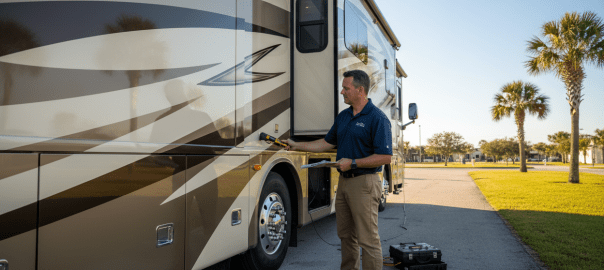
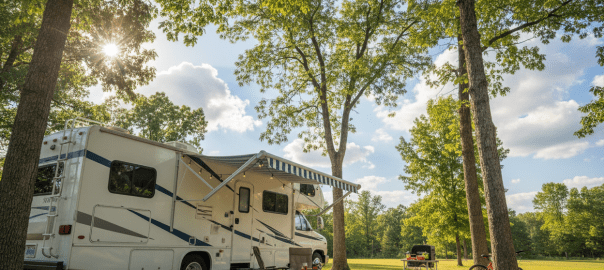
RV Pre-Purchase Inspection: Why It’s the Smartest Investment Before You Buy

Buying an RV is one of the most exciting purchases you’ll ever make — and one of the most expensive. Whether you’re eyeing a gently used travel trailer or a brand-new Class A motorhome, there’s one step too many buyers skip that can cost them dearly down the road: a professional RV pre-purchase inspection (PPI).

At My RV Guy, we’ve seen it all — hidden water damage, faulty electrical systems, and structural issues that weren’t visible during a casual walkthrough. A thorough inspection before you sign on the dotted line isn’t just smart; it’s essential.

What Is an RV Pre-Purchase Inspection?

An RV pre-purchase inspection is a comprehensive evaluation of an RV’s mechanical, structural, electrical, plumbing, and safety systems — performed by a certified, independent inspector before the sale is finalized. Unlike a quick dealer walkthrough, a PPI is an objective, detailed assessment designed to protect you, the buyer.

Inspections typically take 3–5 hours and cover dozens of systems and components. A qualified inspector will provide a written report with photos, findings, and recommended repairs.

Why You Need One — Even on a New RV

Many buyers assume a new RV doesn’t need an inspection. This is one of the most common — and costly — misconceptions in the RV world.

RVs are not built like cars. They’re assembled by hand in large factories, and quality control varies significantly by manufacturer. Industry data consistently shows that new RVs frequently leave the factory with defects, including:

  • Improperly sealed roof seams and slide-outs
  • Loose or missing fasteners in cabinetry and flooring
  • Incorrectly wired electrical systems
  • Appliances that were never tested or calibrated
  • Plumbing connections that weren’t fully tightened

A pre-purchase inspection on a new unit ensures that warranty-covered defects are documented before you take ownership — giving you leverage to have the dealer correct issues at no cost to you.

Common Problems Found During an RV Inspection

Water Damage & Roof Leaks

The #1 issue found in used RVs. Water intrusion is often invisible to the untrained eye but can cause catastrophic structural damage over time. Inspectors use moisture meters to detect hidden damage behind walls, under flooring, and around slide-out seals. Repairs can range from $500 to $10,000+ depending on severity.

Electrical System Failures

From faulty 30/50-amp shore power connections to improperly wired inverters and battery systems, electrical problems are both dangerous and expensive. An inspector will test all outlets, lighting, the converter/charger, and any solar or generator systems.

Mechanical & Engine Issues (Motorhomes)

For Class A, B, and C motorhomes, the engine, transmission, brakes, tires, and chassis are all evaluated. A pre-purchase inspection can reveal deferred maintenance, oil leaks, brake wear, or suspension issues that a seller may not disclose.

Plumbing & Water Systems

Inspectors check fresh, gray, and black water tanks, water heaters, pumps, and all supply lines. Cracked tanks, failing water heaters, and leaking connections are common findings — especially in RVs that have been winterized improperly.

HVAC Systems

Air conditioners, furnaces, and refrigerators are tested for proper operation. A failed rooftop AC unit alone can cost $800–$1,500 to replace.

Structural & Frame Integrity

Soft spots in the floor, delamination on sidewalls, and frame rust or cracks are serious structural concerns. These are often signs of long-term neglect or prior accident damage that may not appear on a vehicle history report.

Safety Systems

Smoke detectors, carbon monoxide detectors, LP gas detectors, and fire extinguishers are all checked for proper function and expiration dates — critical for life safety on the road.

How a Pre-Purchase Inspection Saves You Money

The math is simple. A professional RV inspection typically costs $300–$600. Compare that to common repair costs:

  • Roof leak / water damage: $1,500 – $10,000+
  • Slide-out motor replacement: $500 – $2,000
  • Rooftop AC replacement: $800 – $1,500
  • Engine repair (motorhome): $1,000 – $5,000+
  • Delamination repair: $2,000 – $8,000
  • Plumbing overhaul: $500 – $3,000

A single uncovered issue can cost 5–20x the price of the inspection itself. Beyond avoiding repair costs, a detailed inspection report gives you powerful negotiating leverage — many buyers use findings to negotiate thousands off the purchase price or require the seller to make repairs before closing.

What to Look for in a Qualified RV Inspector

Not all inspectors are created equal. Look for:

  • NAIRVT Certification — The National Association of Independent RV Technicians sets the standard for training and ethics
  • Experience with your RV type — Towables and motorhomes have very different systems
  • Independence — Your inspector should have no financial relationship with the seller or dealership
  • A detailed written report — With photos, findings, and repair recommendations

The Bottom Line

Whether you’re buying new or used, a pre-purchase RV inspection is the single best investment you can make before handing over your hard-earned money. It protects you from hidden defects, gives you negotiating power, and ensures your first trip in your new RV is a celebration — not a repair bill.

At My RV Guy, we’re passionate about helping RV owners make informed decisions. From quality parts and accessories to expert advice, we’re here to keep you rolling with confidence.

Have questions about RV maintenance, parts, or inspections? Browse our catalog or reach out to our team — we’re here to help.

20 Ways to Keep Your RV Cool This Summer

Summer is the peak season for RV adventures — but it can also turn your rig into a rolling oven. Whether you’re parked at a full-hookup campsite or boondocking in the desert, keeping your RV cool is essential for comfort and safety. Here are 20 practical hacks to beat the heat this summer.

1. Park in the Shade

It sounds simple, but strategic parking makes a huge difference. Position your RV so the largest windows and slide-outs face away from direct sunlight. Trees, buildings, or natural terrain can provide valuable shade.

2. Use Reflective Window Covers

Reflective sunshades or foil inserts on your windows block solar heat before it enters the RV. They’re inexpensive, easy to store, and can drop interior temps by 10–15°F.

3. Install Thermal or Blackout Curtains

Upgrade your standard curtains to thermal or blackout versions. These block radiant heat and UV rays while also giving you privacy — a win-win for summer camping.

4. Vent Your Roof Fans Strategically

Run your roof vent fans in exhaust mode during the hottest part of the day to push hot air out. At night, switch to intake mode to pull in cooler outside air.

5. Add a Vent Fan Cover

Vent covers (like the Maxxair or Fan-Tastic brands) let you keep your roof vents open even during rain, allowing airflow 24/7 without worrying about water intrusion.

6. Use an Awning

Deploy your awning on the sunny side of your RV to create shade over windows and the entry door. This can significantly reduce heat gain on that side of the rig.

7. Cook Outside

Using your stovetop or oven inside adds heat and humidity to your RV. Fire up a portable grill or camp stove outside to keep cooking heat out of your living space.

8. Run Your AC Efficiently

Pre-cool your RV before the hottest part of the day (typically 2–5 PM). Set your thermostat to a consistent temperature rather than cranking it up and down, which wastes energy and strains the unit.

9. Insulate Your Roof

If you’re handy, adding reflective insulation or Thinsulate to your ceiling can dramatically reduce heat transfer from the roof — one of the biggest sources of heat gain in an RV.

10. Use a Portable Evaporative Cooler

In low-humidity climates (like the Southwest), a portable swamp cooler can be a cost-effective supplement to your AC. They use far less electricity and work great when humidity is below 50%.

11. Seal Air Leaks

Check around windows, doors, slide-outs, and roof vents for gaps. Use weatherstripping or self-leveling lap sealant to close leaks that let hot air in and cool air out.

12. Add Insulated Skirting

Skirting around the base of your RV isn’t just for winter — it also keeps hot ground-level air from heating your underbelly and floors in summer.

13. Use a Portable Fan

A small battery-powered or USB fan can make a big difference in personal comfort, especially at night. Position it to create cross-ventilation by drawing air across your body.

14. Keep Vents and Registers Clear

Make sure furniture, bedding, and gear aren’t blocking your AC vents or return air registers. Blocked airflow forces your AC to work harder and cool less effectively.

15. Use LED Lighting

Incandescent and halogen bulbs generate significant heat. Switching to LED bulbs throughout your RV reduces heat output and saves battery power — especially important when boondocking.

16. Hydrate and Use Cooling Towels

Personal cooling matters too. Keep a spray bottle of water in the fridge, use cooling towels, and stay well-hydrated. Sometimes the best hack is taking care of yourself, not just the RV.

17. Park Nose-In or Tail-In Based on Sun Direction

Orient your RV so the smallest profile faces the sun. Many RVers find that parking with the rear toward the afternoon sun minimizes heat gain through the large rear windows.

18. Use a Portable Misting System

Attach a misting kit to your awning to create an outdoor cool zone. Misters can drop ambient temperatures by 20°F or more, making your outdoor living space much more enjoyable.

19. Travel During Cooler Hours

If you’re on the move, try to drive in the early morning or evening. This reduces the heat load on your RV while driving and means you arrive at your destination during cooler parts of the day.

20. Service Your AC Before Summer

A well-maintained AC unit cools more efficiently. Clean or replace filters, check refrigerant levels, and inspect the shroud and coils before the summer heat hits. A little preventive maintenance goes a long way.

Stay Cool Out There!

Keeping your RV cool doesn’t have to mean running your AC 24/7. A combination of smart parking, insulation upgrades, ventilation strategies, and a few affordable accessories can make a huge difference in your summer comfort. Have a tip we missed? Drop it in the comments — we’d love to hear what works for your rig!

Getting Your RV Ready for Camping Season: Essential Prep Checklist

Spring is just around the corner, and that means it’s time to shake off the winter dust and get your RV ready for adventure. Whether you’re a seasoned road warrior or planning your first trip of the year, proper preparation ensures a safe, comfortable camping season ahead.

Start with a Thorough Inspection

Before you hit the road, walk around your RV and check for any damage that may have occurred during storage. Look for cracks in seals, damaged awnings, or tire wear. Check your roof for any signs of water damage or deterioration in the sealant around vents and skylights.

Essential Systems Check

Your RV’s critical systems need attention after sitting idle. Test your water pump, check for leaks in water lines, and sanitize your fresh water tank. Inspect your propane system for leaks and ensure all appliances are functioning properly. Don’t forget to check your battery charge and connections—corroded terminals can leave you stranded.

Tire Safety Matters

Tires are one of the most overlooked yet critical components. Check tire pressure when they’re cold, inspect for cracks or bulges, and verify the tread depth. Remember, RV tires age out even with low mileage, so check those date codes.

Interior Refresh

Open windows and air out your RV to eliminate any musty odors. Check for signs of moisture or pest intrusion. Test all lights, outlets, and entertainment systems. Restock your emergency kit, first aid supplies, and any camping essentials you may have depleted last season.

Exterior Maintenance

Clean and inspect your awning, lubricate slide-out mechanisms, and check all exterior lights and turn signals. A good wash and wax not only makes your RV look great but protects the finish from UV damage and road grime.

Create Your Pre-Trip Checklist

Develop a routine checklist you can use before every trip. Include items like checking fluid levels, testing brakes, verifying hitch connections, and ensuring all safety equipment is accessible.

Taking the time now to properly prepare your RV means more time enjoying the open road and less time dealing with preventable issues. Here’s to a fantastic camping season ahead!

Robins Hollow

One day I went to Holiday Acres as a quest of a friend. He wanted to show me his new site and camper. Afterwards, we walked down to the pond to do some fishing. Not much was happening while fishing from shore. I noticed a canoe and asked if we could take it out and fish from it. There is never much in the middle of the pond, unless you’re fishing for bullhead. Casting into the shore is how I’ve always caught bass. He said, “No, I catch more from the shore.” Some time went by and I asked again. He adamantly rejected my request. I could tell something else was at play.

Eventually he told me the story of the last time he went out in the canoe. On the way back to camp the wind had picked up significantly. The harder it blew towards him the harder he paddled. The harder he paddled the further the front of the canoe went out of the water. The battle persisted for awhile until the wind won and flipped him over in the canoe. He was now afraid to go out on the pond.

What he didn’t realize was he could have just put the paddle down and let the wind take him to the calmer water. Then he could have just paddled gently back to camp by following the shoreline. Robins Hollow is not that big of a pond.

I tell this story because sometimes we get so caught up in getting things done our way, we forget there may be a better way. Instead of fighting the wind he should have worked with it to get back home. We all have experienced this in our lives at one time or another. It could have been in business, in a relationship, or in a number of other areas of our lives. Fighting against adversity is good, but knowing when to put the paddle down it better. Maybe it was God telling my friend, “I have a better way!”

RV Maintenance Checklist for Every Season: Keep Your RV Road-Ready Year-Round

Regular RV maintenance is the key to avoiding breakdowns, extending your RV’s lifespan, and ensuring safe travels. Use this comprehensive seasonal maintenance checklist to keep your RV in top condition throughout the year.

Spring Maintenance Checklist

Spring is the perfect time to prepare your RV for the camping season ahead, especially if you’ve had it in winter storage.

Exterior Inspection

Walk around your RV and inspect the roof, sidewalls, and undercarriage for any damage that may have occurred during winter. Check all seals around windows, doors, and roof vents. Our Roof & Sealing collection has everything you need for repairs.

Plumbing System

If you winterized, flush the antifreeze from your system and sanitize your fresh water tank. Check for leaks in all faucets, connections, and the water heater. Replace any worn parts from our Plumbing & Water Systems section.

Electrical System

Test all lights, outlets, and appliances. Check your battery charge and clean terminals. Inspect your power cord for damage. Browse our Electrical & Lighting collection for replacements.

Tires and Wheels

Check tire pressure, inspect for cracks or wear, and verify proper lug nut torque. Don’t forget your spare tire!

Summer Maintenance Checklist

Summer heat puts extra stress on your RV systems, so regular checks are essential.

Cooling Systems

Clean or replace your air conditioner filters monthly during heavy use. Check refrigerator vents and ensure proper cooling. Find maintenance supplies in our Heating & Cooling collection.

Awning Care

Inspect your awning fabric for tears, clean it regularly, and lubricate moving parts. Check our Awnings & Exterior section for cleaning products and replacement parts.

Holding Tanks

With increased use, monitor your holding tanks closely. Use quality tank treatments to prevent odors and buildup. Shop our Sanitation & Waste collection.

Generator Maintenance

If you have a generator, change the oil, check the air filter, and run it under load monthly to keep it in good condition.

Fall Maintenance Checklist

As camping season winds down, prepare your RV for cooler weather or storage.

Heating System

Test your furnace before you need it. Clean or replace filters and check for proper operation. Our Heating & Cooling products include furnace parts and accessories.

Weatherproofing

Inspect and replace worn weatherstripping around doors and windows. Check all seals and caulking before winter weather arrives.

Appliance Check

Test all appliances including your water heater, stove, and oven. Replace any faulty components from our Appliances & Kitchen collection.

Safety Equipment

Test smoke detectors, carbon monoxide detectors, and fire extinguishers. Replace batteries and expired equipment. Visit our Emergency & Safety section.

Winter Maintenance Checklist

Whether you’re storing your RV or winter camping, proper maintenance is crucial.

For Storage

Follow proper winterization procedures (see our complete winterization guide). Cover your RV if possible and check on it periodically throughout winter.

For Winter Camping

Insulate water lines, use heated hoses, and keep cabinet doors open during freezing temperatures. Stock up on winter camping essentials.

Battery Maintenance

Keep batteries charged during storage or maintain them with a quality battery maintainer. Find battery care products in our Electrical & Lighting collection.

Year-Round Maintenance Tasks

Monthly Tasks

  • Check tire pressure and condition
  • Test all lights and signals
  • Inspect for leaks (water and propane)
  • Clean or replace air filters
  • Check battery water levels (if applicable)

Every Trip

  • Check tire pressure when cold
  • Inspect hitch and safety chains
  • Test brakes and brake controller
  • Verify all lights work
  • Check propane levels

Annual Tasks

  • Professional inspection of roof and seals
  • Wheel bearing inspection and repack
  • Brake inspection and adjustment
  • Water heater anode rod replacement
  • Deep clean and wax exterior

Keep Maintenance Supplies on Hand

Stock your RV with essential maintenance and repair supplies. Our Maintenance & Repair collection has everything you need including sealants, lubricants, cleaners, and tools.

Don’t Forget the Hardware

Keep a well-stocked supply of common fasteners, screws, and hardware for quick repairs. Browse our Hardware & Fasteners collection.

Upgrade While You Maintain

Maintenance time is also a great opportunity to upgrade your RV. Check out our Upgrades & Accessories collection for LED lighting, solar panels, and other improvements.

Final Thoughts

Regular maintenance might seem like a chore, but it’s far less expensive and stressful than dealing with breakdowns on the road. Create a maintenance log to track what you’ve done and when, and you’ll enjoy worry-free RVing for years to come.

Need parts or supplies for your seasonal maintenance? Browse our complete selection organized by category to find exactly what you need. Happy RVing!

The Next Step

Friends,

Over the past year I’ve been excited by your interest in owning your own My RV Guy® franchise. Many have different reasons for considering a My RV Guy mobile RV services business. Some have commented they “love the business model’, others are looking to get into mobile repair, and there are more who are just getting burnt out by what they are currently doing. My first Franchisee purchased a My RV Guy franchise to supplement his restaurant trailer business. There is a bit of lag time between building one and selling one, so adding a My RV Guy franchise was just what he needed to keep the money flowing in-between.

I’m reminded of my first job interview with the owner of a large RV dealership years ago. It took a lot of persistence just to get that interview, but there I was. He asked me about money; it was a sales position based mainly on commission. I responded, “Honestly, I’m more concerned about environment than money” knowing that if I’m in the right environment I can’t help but to succeed. I became a top producer and saved enough money to open my first My RV Guy location and have never looked back.

In business we do what we can today, knowing the next step will be revealed to us at the right time. That is how I built my first successful business thirty-four years ago. You see, as we go along new opportunities are revealed to us. We don’t need to see every mile ahead of us to get to our destination. It’s like driving down an unlit highway. Although we can only see about three-hundred feet in front of us, we can travel thousands of miles.

My RV Guy® is a lucrative business with a fantastic lifestyle. Let me know when you are ready. I’d love to have you onboard!

Happy New Year,

Ron Ash aka My RV Guy®

Now Offering Franchisee’s Financing Through Lendzee

With some basic information from you, our system will pull a “SOFT” credit report that does NOT affect your credit scores or trigger an inquiry. This Credit Score and Income information is then calculated using our affordability program to maximize funding capability and will show us how much you qualify for using multiple different types of funding solutions!

We use this data to arrange, negotiate and close multiple loans, therefore giving you the ability to have multiple options and give you the total amount of funding you need!

A funding Consultant will contact you within 24 business hours to discuss your pre-approval and next steps.

Workamper News on My RV Guy Franchising LLC

Today I am speaking with an entrepreneur from Rhode Island who has launched an interesting business opportunity for people who love the RV lifestyle and have a knack for problem-solving.

My guest is Ron Ash, the founder of MyRVGuy. It is a growing franchise that provides mobile RV services across the country.

Ron shares how he turned his passion for RVs and business into a thriving enterprise and how others can do the same.

A MyRVGuy franchise is designed for RVers who are mechanically inclined, self-motivated and passionate about helping fellow travelers maintain and repair their rigs.

Whether you RV full-time or do so seasonally, if you’ve ever considered running your own business to support your travel experiences, you will enjoy this interview.

He outlined an interesting business opportunity for tech-minded individuals looking for ways to make money by helping other RVers.

It’s an ideal fit for Workampers or other professionals looking to establish a sustainable income while enjoying the freedom of the road.

Becoming a MyRVGuy franchisee requires an initial investment, which typically falls between $40,000 and $60,000, depending upon equipment you already own.

The initial franchise fee grants business owners access to the MyRVGuy brand, its established reputation and a wealth of other resources.

The fee includes tools and equipment to stock a well-equipped service vehicle with essential tools for diagnosing and repairing RV issues. If you already own a truck and tools, your startup costs may be on the lower end.

MyRVGuy provides a proven business model, including a recognizable brand, online presence, advertising support and customer referrals to help franchisees secure jobs right away.

While prior experience as an RV technician is helpful, it’s not required. MyRVGuy offers ongoing training and access to certifications through industry-recognized programs. Franchisees also enjoy access to manufacturer training, business mentorship and technical guidance to help grow their expertise.

Franchisees can choose their own service areas, meaning they’re not locked into a single location. Whether you prefer working in a fixed territory or traveling from state to state, MyRVGuy offers the flexibility to earn an income wherever you roam.

Franchisees benefit from exclusive partnerships with insurance companies, warranty providers and major RV manufacturers to provide a steady stream of work opportunities.

One of the biggest advantages of owning a MyRVGuy franchise is that it’s a business you can build and sell when you’re ready to retire.

To learn more about this opportunity, visit http://www.myrvguyfranchise.com (http://www.myrvguyfranchise.com) .

Today’s episode is sponsored by Workamper News. Much more than just a job-listing website, when you put the tools of this professional service into action, you’ll find out just how easy it can be to turn your Workamping dreams into reality.

A Workamper membership opens the door to a one-stop-shop for all-things Workamping. Being the original resource for Workamping, you’ll find the largest number of job listings, be able to connect with a community of Workampers, and view resources compiled by experts who have been enjoying the RV lifestyle for many years.

If you’re serious about leading a successful and enjoyable Workamping lifestyle, then membership is for you. Join today at http://www.workamper.com (http://www.workamper.com) . Embark on new adventures today with the support of Workamper News behind you!

That’s all for this week’s show. Next time I will be speaking with the owners of a Colorado wedding venue located on a spacious ranch. I’ll have that interview on the next episode of The Workamper Show. Thank you for listening!

Adversity Begets Invention

When I first started in the RV industry my sales manager had a problem with me from day one. I didn’t get it. My resume was dumbed down to the point that during my interview the owner kept saying, ” We don’t have any driving jobs”, so I’m not sure what the issue was. Anyway, I am a “here’s where we are, so what are we going to do about it” guy. Getting my own leads was the only option.

I developed a lead generation and maintenance plan. I immediately went into data collection mode. Every customer I came across on the lot or over the phone would go into the CRM. All contact information to follow up would be entered. Whenever I was free, I’d market over social media via short one minute video presentations, blogs and email blasts. That’s when the My RV Guy brand was created. Each video started with, “It’s Ron Ash aka My RV Guy. Today I’d like to show you a …” Immediately after I’d post them across social media. I created brand specific platforms on Facebook, Instagram and YouTube. I ordered pens with my name, photo, call or text number, and Instagram @myrvguy to give away, because business cards are toilet paper. 😆 I brought in more customers than I could handle, giving away the overflow to the other sales staff. Needless to say, I was a top grosser and producer. I wasn’t just selling RVs, but the customer service associated with buying from me and our dealership.

Exactly one year later that sales manager was bragging about a sales person who he once worked with. He said she sold something like one hundred RVs in a year. I replied, ” I do that in less than three months.” That’s when the harassment stopped and we became the best of friends. I guess he married his first impression of me until then. A story strange and true.

Adversity begets invention. That’s how My RV Guy was born. A few years later the dealership sold to a national change. I could see I wouldn’t be able to offer customers the service they were accustomed to and I saw no profit in that, so I took an inventory and realized I had the power of the My RV Guy brand! I invested in a niche market, mobile RV services and never looked back. Sales doubled in year three over year two. Now we’re Franchising nationwide.

Remember, it’s our choice to be the victim or to be victorious. What will you choose?

SPRING IS IN THE AIR

SPRING IS A TIME FOR NEW BEGINNINGS

Hello Campers,

Life is a series of constant changes which work together to move us forward in every area of our lives. Good and bad experiences give us the tools we’ll need to conquer the next level in what some refer to as the game of life.

Millennials get a bad rap in regards to their approach to life, especially from Boomers and the Gen-Xers, but in many ways, they have the right idea. Life is all about living! What we experience today will bring us to where we need to be tomorrow. It may have just taken us a little longer to figure out what they already understand. Time is our most precious commodity, so spend it wisely.

I learned this decades ago through my mom’s unexpected illness. It doesn’t really matter what you die with. It’s who you live with. Sure, there is a certain amount of planning involved, but all plans are tentative and any illusion of control is exactly that; illusion. The memories we make are all we’ll really keep. It’s what we remember about special times together and what those special people in our lives will remember about us when we are gone.

This is what I want to share with you all today. Don’t get caught up in worrying about what may or may not be tomorrow. The past is gone, the future is not here yet, all we really have is right now. That’s where God lives. So, my wish for you all is to take time with your family and friends, and experience the joy of each day as you relish in every moment right now. Get intentional about creating more memorable memories. In the end, that’s all that counts. Everything else shall pass, but what we instill in the hearts and minds of those we care about will live on forever.

Happy camping,

Ron Ash (CEO & Founder at My RV Guy Franchising LLC)


TECH TALK

Failure to winterize your RV could cause the water in the lines and the pipes to freeze. Once the water freezes, it will expand and crack your pipes, which can be costly and time-consuming to repair. Most RV enthusiasts know how important it is to properly winterize, but few place a value on proper de-winterization procedures. Decontaminating your water system is one of the most crucial steps of RV spring preparation. When you are on the road, you rely on a clean source of water for cooking, drinking, washing dishes and showering.

Standing drinking water has serious health implications. Bacteria growth is ongoing in stagnant water, with possible serious consequences such as Legionnaires’ disease. We add antifreeze to our water systems to treat water that did not drain. This does not stop the bacteria from contaminating your water system. Bacteria thrives in untreated water. So, RVers are at a higher risk than the rest of the population when it comes to Legionella infections.

De-winterizing involves much more than flushing out the old antifreeze. It is a process of sanitizing the system and protecting your investment, and making sure your water-heater, HVAC, appliances and propane system are in working order. It’s also an opportunity to have your seals checked. Most RVers don’t realize that manufactures recommend inspecting seals every ninety days and making repairs when necessary. Your RV service technician will usually conduct this system check as part of your De-winterization aka Spring Opening to make sure you and your family are ready to Go RVing.


MY RV GUY FRANCHISE PARTNERS

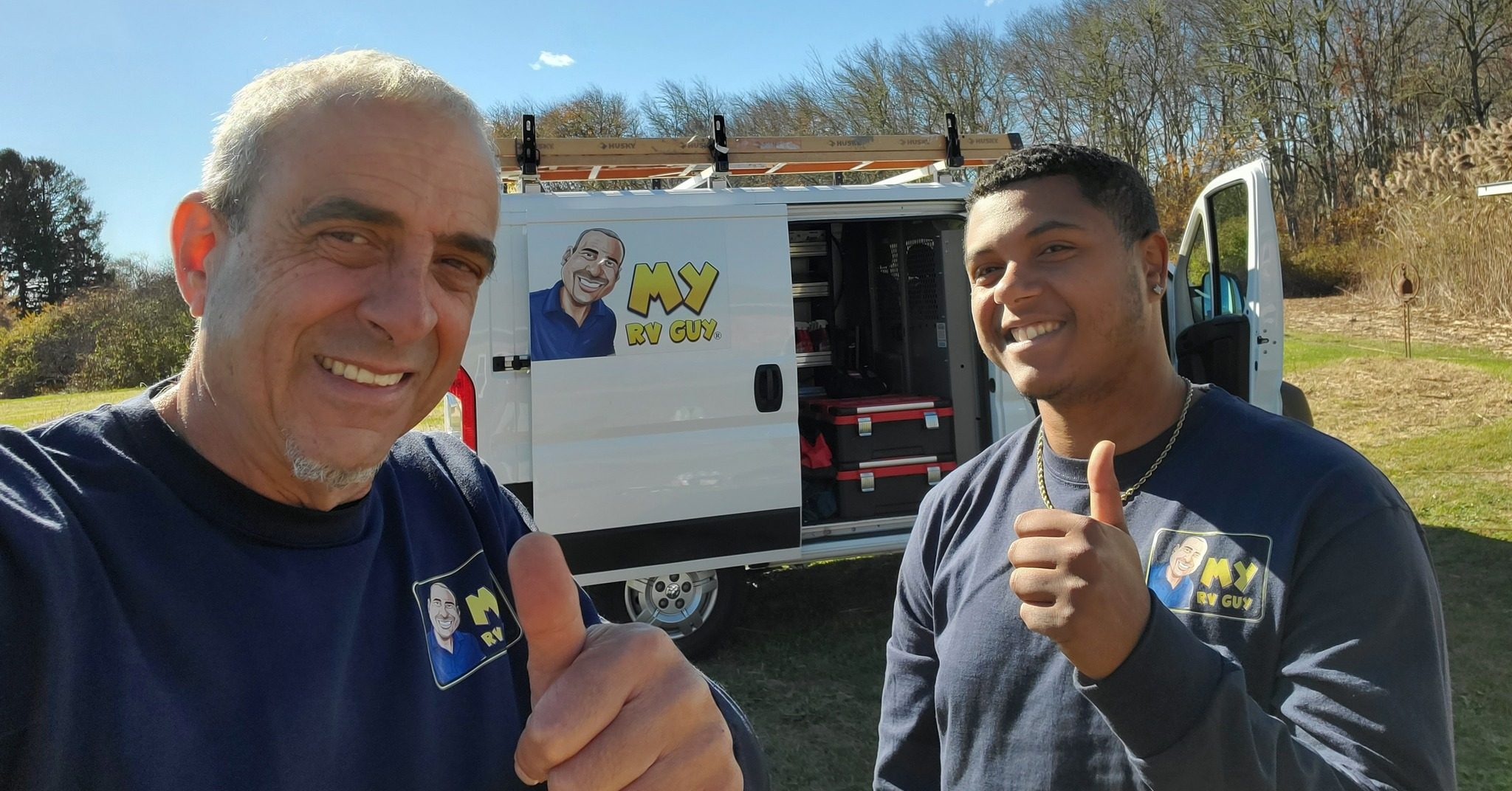
My RV Guy is an owner-operated business that takes pride in being able to provide its customers with a high-quality, honest, and valuable service at competitive prices. Our success is based on a customer-first approach, which will carry forward in our franchise program. Our ideal candidate will also be professional, outgoing, and mechanically inclined.

TRAINING AND SUPPORT

We’ll Help You Take The Road Less Traveled.

The owner/operator franchise model involves significant investment of time and lifestyle, which is why we aim to empower motivated franchisees to become profitable entrepreneurs. As a My RV Guy franchisee, we’ll provide every possible tool to help you achieve your business goals.

Comprehensive Training

We designed our dual-phase initial training program to answer all your questions. Our goal is to give our franchise partners a strong foundation for operational success.

Support

  • Operational – My RV Guy will provide ongoing training and support in many areas, including technology and software training, product ordering, customer-service techniques, accounting and administration.
  • Marketing– We’ll utilize our extensive marketing expertise to coordinate the development of advertising materials and SEO/SEM strategies to help franchisees leverage our established brand.
  • Ongoing Research & Development – My RV Guy leadership will continue to research methods and techniques for franchise operations that enhance unit-level profitability.

Off Season On The Pond

Hello Campers,

Fall weekends on the pond came to mind this morning. As children we stayed outside most of the day. The temperature dropping a few degrees didn’t change that. We’d throw on progressively heavier clothing and enjoy the subtle changes of the off season on Johnson’s Pond.

Most packed up and headed back to the city before this magical time of year began and wouldn’t return until Memorial Day weekend. We were lucky to have our primary residence less than an hour away, so for us that was not the case. Our Camp Ash didn’t suffer from a lack of use.

The air was cool and fresh, and there was a quiet that didn’t exist on a hot summer’s weekend by the water. This was the perfect recipe for expanding a child’s imagination. In those early years I’d build entire ranches with twigs and pine needles. I’d break up tiny branches, stick the twigs in the ground and create corral fences, barns and log cabins. Nature’s toys!

Eventually we’d take in our floating docks by laying them on rollers. That’s about the time I learned about leverage. The boats would get winterized, but we’d still take out the canoe or jon boat until the pond froze over. Once that happened it would be time to skate the pond. That experience went beyond peaceful. When the ice was safe enough, we’d skate the entire cove. I still have vivid memories of my neighbor Vinny losing himself in the present as he made the most of the experience.

Although the days ended sooner and cooler, a roaring fire accompanied by an old song or scary story, and our combined laughter made every hour a bit more valuable. The stars above seemed a lot more abundant too. Maybe it was because our senses became more aware as we were absent of distractions. Whatever the case, I’ll always cherish those special moments together off season on the pond.

Happy camping!

Ron Ash aka My RV Guy

IT’S TIME TO SCHEDULE YOUR RV WINTERIZATION

My RV Guy offers an RV winterization service to protect your RV from cold weather damage by draining the water system, blowing out lines, adding RV antifreeze, and preparing vulnerable components for storage. This process prevents pipes from freezing and cracking, ensuring your RV is ready for use in the spring. You can schedule this service through My RV Guy to have their technicians prepare your vehicle for the winter. 

How My RV Guy’s Winterization Service Works

  • Draining the water system:Water is removed from the fresh water tank and hot water heater. 
  • Bypassing the water heater:The water heater is bypassed to prevent antifreeze from filling it, which saves antifreeze and makes the process more effective for the plumbing. 
  • Blowing out lines:Compressed air is used to remove any remaining water from the water lines and pipes. 
  • Adding RV antifreeze:Non-toxic RV antifreeze is pumped through the plumbing system to protect it from freezing. 
  • Protecting vulnerable components:This step helps protect components from the elements, though the exact details can vary by RV and service level. 

Why Winterize Your RV? 

  • Prevent freezing damage:The primary goal is to prevent water from freezing in your RV’s plumbing, which can cause pipes, tanks, and other components to crack and burst.
  • Ensure readiness for spring:A properly winterized RV will be ready to use when warmer weather returns without needing extensive repairs.

How to Schedule Service

You can schedule your RV winterization service directly through My RV Guy. Their website myrvguy.shop provides information on services and how to contact them.