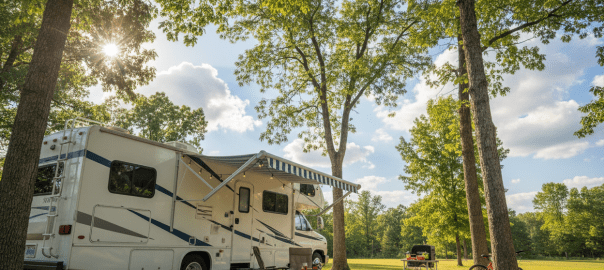
Summer is the peak season for RV adventures — but it can also turn your rig into a rolling oven. Whether you’re parked at a full-hookup campsite or boondocking in the desert, keeping your RV cool is essential for comfort and safety. Here are 20 practical hacks to beat the heat this summer.
1. Park in the Shade
It sounds simple, but strategic parking makes a huge difference. Position your RV so the largest windows and slide-outs face away from direct sunlight. Trees, buildings, or natural terrain can provide valuable shade.
2. Use Reflective Window Covers
Reflective sunshades or foil inserts on your windows block solar heat before it enters the RV. They’re inexpensive, easy to store, and can drop interior temps by 10–15°F.
3. Install Thermal or Blackout Curtains
Upgrade your standard curtains to thermal or blackout versions. These block radiant heat and UV rays while also giving you privacy — a win-win for summer camping.
4. Vent Your Roof Fans Strategically
Run your roof vent fans in exhaust mode during the hottest part of the day to push hot air out. At night, switch to intake mode to pull in cooler outside air.
5. Add a Vent Fan Cover
Vent covers (like the Maxxair or Fan-Tastic brands) let you keep your roof vents open even during rain, allowing airflow 24/7 without worrying about water intrusion.
6. Use an Awning
Deploy your awning on the sunny side of your RV to create shade over windows and the entry door. This can significantly reduce heat gain on that side of the rig.
7. Cook Outside
Using your stovetop or oven inside adds heat and humidity to your RV. Fire up a portable grill or camp stove outside to keep cooking heat out of your living space.
8. Run Your AC Efficiently
Pre-cool your RV before the hottest part of the day (typically 2–5 PM). Set your thermostat to a consistent temperature rather than cranking it up and down, which wastes energy and strains the unit.
9. Insulate Your Roof
If you’re handy, adding reflective insulation or Thinsulate to your ceiling can dramatically reduce heat transfer from the roof — one of the biggest sources of heat gain in an RV.
10. Use a Portable Evaporative Cooler
In low-humidity climates (like the Southwest), a portable swamp cooler can be a cost-effective supplement to your AC. They use far less electricity and work great when humidity is below 50%.
11. Seal Air Leaks
Check around windows, doors, slide-outs, and roof vents for gaps. Use weatherstripping or self-leveling lap sealant to close leaks that let hot air in and cool air out.
12. Add Insulated Skirting
Skirting around the base of your RV isn’t just for winter — it also keeps hot ground-level air from heating your underbelly and floors in summer.
13. Use a Portable Fan
A small battery-powered or USB fan can make a big difference in personal comfort, especially at night. Position it to create cross-ventilation by drawing air across your body.
14. Keep Vents and Registers Clear
Make sure furniture, bedding, and gear aren’t blocking your AC vents or return air registers. Blocked airflow forces your AC to work harder and cool less effectively.
15. Use LED Lighting
Incandescent and halogen bulbs generate significant heat. Switching to LED bulbs throughout your RV reduces heat output and saves battery power — especially important when boondocking.
16. Hydrate and Use Cooling Towels
Personal cooling matters too. Keep a spray bottle of water in the fridge, use cooling towels, and stay well-hydrated. Sometimes the best hack is taking care of yourself, not just the RV.
17. Park Nose-In or Tail-In Based on Sun Direction
Orient your RV so the smallest profile faces the sun. Many RVers find that parking with the rear toward the afternoon sun minimizes heat gain through the large rear windows.
18. Use a Portable Misting System
Attach a misting kit to your awning to create an outdoor cool zone. Misters can drop ambient temperatures by 20°F or more, making your outdoor living space much more enjoyable.
19. Travel During Cooler Hours
If you’re on the move, try to drive in the early morning or evening. This reduces the heat load on your RV while driving and means you arrive at your destination during cooler parts of the day.
20. Service Your AC Before Summer
A well-maintained AC unit cools more efficiently. Clean or replace filters, check refrigerant levels, and inspect the shroud and coils before the summer heat hits. A little preventive maintenance goes a long way.
Stay Cool Out There!
Keeping your RV cool doesn’t have to mean running your AC 24/7. A combination of smart parking, insulation upgrades, ventilation strategies, and a few affordable accessories can make a huge difference in your summer comfort. Have a tip we missed? Drop it in the comments — we’d love to hear what works for your rig!

