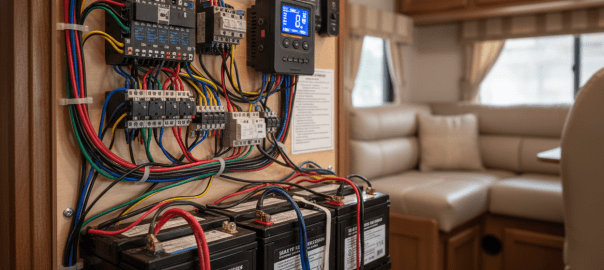
One of the most intimidating aspects of RV ownership for newcomers is the electrical system. Wires, batteries, inverters, shore power — it can feel overwhelming. But once you understand the basics, it all starts to make sense. This guide breaks down RV electrical systems in plain English so you can camp smarter and troubleshoot with confidence.
The Two Electrical Systems in Your RV
Every RV has two separate electrical systems that work together:
- 12-volt DC system — powered by your batteries, this runs lights, fans, water pump, slides, and most built-in appliances when you’re off-grid.
- 120-volt AC system — the same type of power as your home, this runs your air conditioner, microwave, outlets, and other high-draw appliances. It requires shore power, a generator, or an inverter.
Understanding which system powers which appliance is the first step to mastering your RV’s electrical setup.
Shore Power (Campground Hookups)
When you plug into a campground pedestal, you’re connecting to shore power — standard AC electricity. Most RVs use either a 30-amp or 50-amp connection:
- 30-amp: One 120V hot leg, up to 3,600 watts total. Common on smaller trailers and Class C motorhomes.
- 50-amp: Two 120V hot legs, up to 12,000 watts total. Standard on larger Class A motorhomes and fifth wheels with dual AC units.
You can use adapters (“dogbone adapters”) to connect a 50-amp RV to a 30-amp pedestal or vice versa, but be aware of the power limitations when doing so.
RV Batteries: Your Off-Grid Power Bank
Your house batteries store energy for use when you’re not plugged in. There are three main types:
- Lead-acid (flooded): The traditional, affordable option. Requires regular water top-offs and venting. Usable capacity is about 50% of rated amp-hours.
- AGM (Absorbed Glass Mat): Sealed, maintenance-free, and more vibration-resistant. Still limited to about 50% depth of discharge.
- Lithium (LiFePO4): The premium choice. Usable capacity is 80–100%, lighter weight, longer lifespan, and faster charging. Higher upfront cost but often worth it for frequent campers.
Battery capacity is measured in amp-hours (Ah). A 100Ah battery can theoretically supply 10 amps for 10 hours — though real-world usage varies based on battery type and discharge rate.
Understanding Amp-Hours and Power Draw
To figure out how long your batteries will last, you need to know how much power your appliances draw. Here are some common examples:
- LED lights: 1–2 amps each
- Roof vent fan: 2–4 amps
- Water pump: 4–7 amps (while running)
- 12V refrigerator: 3–6 amps average
- Furnace blower: 6–12 amps
- Laptop charging: 3–5 amps
Add up your expected daily usage to estimate how many amp-hours you’ll need and size your battery bank accordingly.
Converters vs. Inverters — What’s the Difference?
These two devices are often confused but do opposite jobs:
- Converter: Converts AC shore power into DC to charge your batteries and run 12V systems. Almost every RV has one built in.
- Inverter: Converts DC battery power into AC so you can run 120V appliances (like a microwave or TV) without being plugged in. This is an optional upgrade that’s popular for boondockers.
Many modern RVs come with a inverter/charger combo unit that handles both functions seamlessly.
Solar Power: Free Energy from the Sun
Solar panels are one of the most popular upgrades for RVers who love off-grid camping. Here’s how a basic solar setup works:
- Solar panels collect sunlight and generate DC electricity.
- A charge controller (MPPT or PWM) regulates the power flowing into your batteries to prevent overcharging.
- Power is stored in your house batteries for use anytime.
- An inverter (if installed) converts that stored power to AC for high-draw appliances.
A basic starter solar setup of 200–400 watts is enough to maintain batteries and run lights, fans, and devices. Serious boondockers often run 600W–1,200W or more.
Generators: On-Demand Power Anywhere
A generator produces AC power on demand, making it ideal for running your air conditioner or other high-draw appliances when you’re off-grid. Key things to know:
- Built-in (onboard) generators are common on Class A and Class C motorhomes.
- Portable generators are popular with trailer owners — look for “inverter generators” which run quieter and are safer for electronics.
- Always run generators outside and never inside an enclosed space due to carbon monoxide risk.
- Check campground rules — many have quiet hours that restrict generator use.
Common RV Electrical Problems and Quick Fixes
Even with a solid understanding of your system, issues come up. Here are the most common ones:
- Tripped breaker: Check your breaker panel (usually inside the RV) and the campground pedestal breaker. Reset and reduce your load.
- Dead batteries: Check connections for corrosion, test voltage with a multimeter (fully charged 12V battery = ~12.6V), and check if your converter is working.
- No power at outlets: Check GFCI outlets — one tripped GFCI can cut power to multiple outlets. Press the reset button on the GFCI outlet.
- Low voltage at the pedestal: Use a surge protector with voltage monitoring. Low voltage (under 105V) can damage appliances and AC units.
Essential Electrical Accessories Every RVer Should Have
- Surge protector / EMS (Electrical Management System): Protects your RV from power surges, low voltage, and wiring faults at campgrounds. A must-have.
- Multimeter: Inexpensive and invaluable for diagnosing battery and wiring issues.
- Dogbone adapters: 30-to-50 amp and 50-to-30 amp adapters for campground flexibility.
- Extension cord (30A or 50A rated): For sites where the pedestal is far from your hookup.
- Battery monitor: Shows real-time state of charge, voltage, and amp draw so you always know your power status.
Safety First
RV electrical systems carry real risks if mishandled. Always follow these safety rules:
- Never work on live wiring — disconnect shore power and disconnect batteries before any electrical work.
- Install a carbon monoxide detector and smoke alarm in your RV.
- Use a surge protector every time you plug into shore power.
- If you’re unsure about a repair, consult a certified RV technician.
You’ve Got This!
RV electrical systems aren’t as scary as they seem once you break them down into their basic components. Start by understanding what’s in your rig, learn your power needs, and invest in a few key accessories like a surge protector and battery monitor. From there, you’ll be well on your way to confident, comfortable camping — whether you’re plugged in at a full-hookup site or parked under the stars miles from the nearest outlet.
Have questions about your RV’s electrical system? Contact our team — we’re here to help!
 My RV Guy